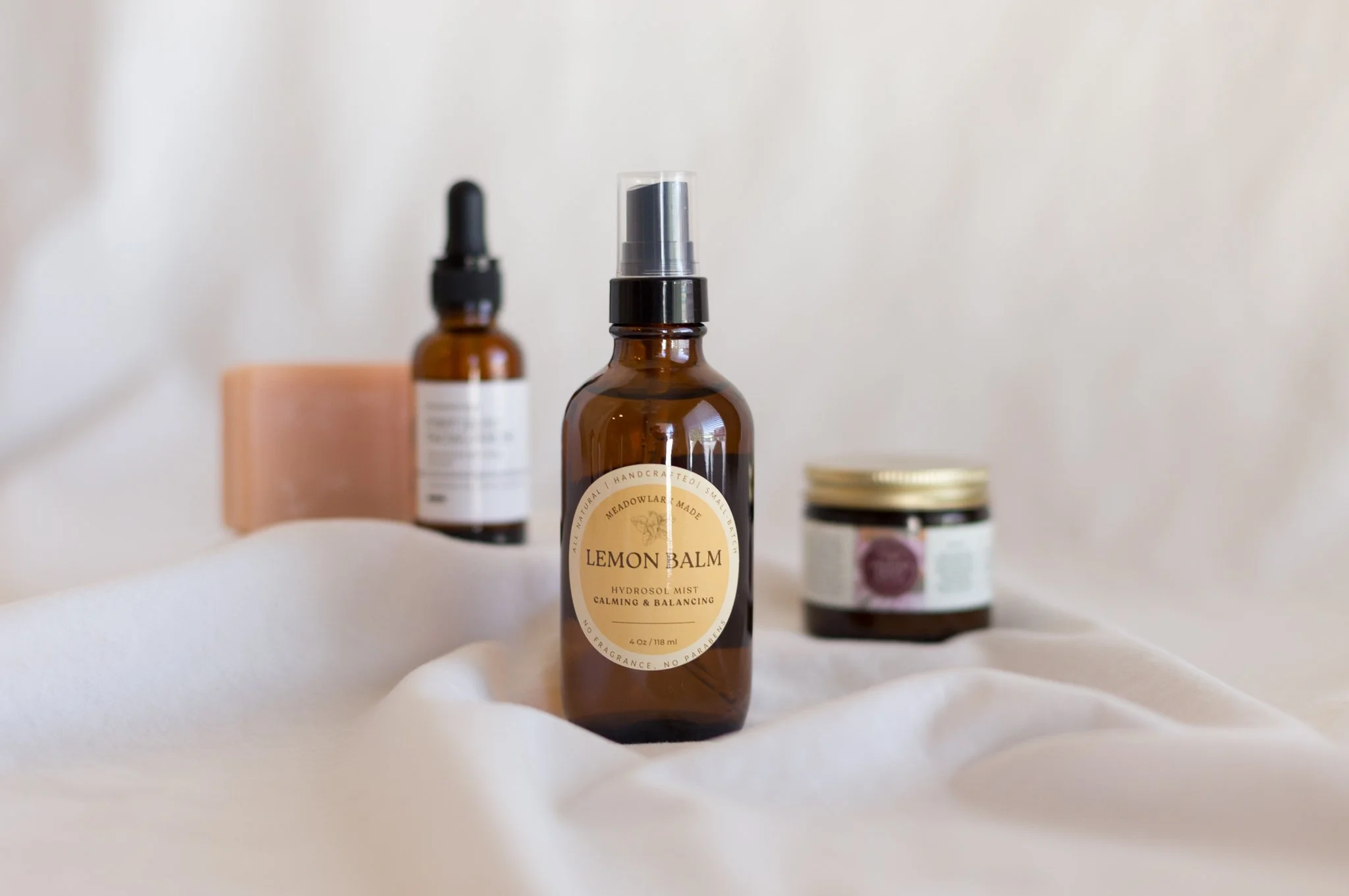
What Is a Hydrosol (And Why It Deserves a Spot in Your Routine)
If you’ve never heard of a hydrosol before, you’re not alone. Most people haven’t. They’re one of the most useful things in botanical skincare and one of the least talked about, which is exactly why we wanted to write this.
Maybe you saw one on our table at the farmers market and picked it up. Maybe you found it on our site and the word hydrosol meant nothing to you. Either way, here’s the full explanation because once you understand what a hydrosol actually is and what it does for your skin, you won’t want to skip it.
The question we get most often once people do know what they’re looking at is this:
Is this just flower water?
It’s not. Not even close.
How a Hydrosol Is Made
To understand what a hydrosol is, you have to start with how essential oils are made. The most traditional method is steam distillation. Plant material, flowers, leaves, roots, bark, is placed in a still and steam is pushed through it. The heat and pressure cause the plant’s volatile aromatic compounds to release. That vapor is then captured and cooled, and it separates into two things. The concentrated essential oil, which floats on top, and the water-based fraction underneath. That water is the hydrosol.
It carries the water-soluble compounds from the plant. Organic acids, tannins, gentle aromatic molecules, plant-specific compounds that didn’t make it into the essential oil because they’re not oil-soluble. These compounds have real benefits for skin and they exist in the hydrosol in a concentration gentle enough to apply directly without dilution or irritation.
The hydrosol smells like the plant. It behaves like the plant. But it’s considerably gentler than the essential oil, which is why hydrosols are appropriate for direct skin application in ways that undiluted essential oils are not.
This isn’t a new concept. Hydrosols have been used in botanical skincare and traditional herbalism for centuries. Rose water is probably the most well-known example and it’s exactly this: a hydrosol of rose petals. They fell out of mainstream skincare conversations for a while when the industry shifted toward synthetic active ingredients, but they never disappeared from herbal apothecary practice. They’re not a trend. They’re just underexplained.
What Hydrosols Actually Do for Your Skin
Here’s where the practical case gets made.
Your skin has a naturally acidic pH, typically somewhere between 4.5 and 5.5. That slightly acidic environment is called the acid mantle and it’s one of your skin’s primary lines of defense. It supports the good bacteria that live on your skin, it helps regulate moisture, and it creates an environment that’s hostile to a lot of pathogens. It matters a lot.
Most cleansers, even gentle ones, are more alkaline than your skin. When you wash your face, you temporarily raise your skin’s pH. Your skin can rebalance on its own but it takes anywhere from fifteen minutes to an hour or more depending on your skin and the cleanser you’re using. During that window, your barrier is slightly compromised and whatever you apply next is absorbing into skin that isn’t fully ready for it.
A hydrosol resets that pH almost immediately. Most hydrosols are naturally acidic, right in the range your skin wants to be, and misting one on after cleansing brings your acid mantle back into balance before you apply anything else. This is the most underappreciated thing hydrosols do and it’s also one of the most impactful. Your serum works better. Your balm absorbs better. Everything downstream performs better because the foundation is right.
Beyond pH, hydrosols provide a layer of botanical hydration that’s different from what a heavy cream or oil can offer. Applied on damp skin, a hydrosol leaves a thin film of plant water that your subsequent products can seal in. In summer when transepidermal water loss is higher, that extra layer of moisture before your balm makes a measurable difference.
And then there are the plant-specific benefits. Every botanical brings something different. Some hydrosols are particularly calming for reactive or redness-prone skin. Some are brightening. Some are balancing for skin that tends toward oiliness. Some are regenerative. The hydrosol you choose should match what your skin actually needs, which is why we don’t just carry one.
How to Use a Hydrosol
The application is simple and it matters that you do it right.
Cleanse your face as normal and don’t fully dry it. Your skin should be slightly damp when you apply the hydrosol. Hold the bottle six to eight inches from your face and mist two or three times. You can also spray it onto your hands and press it into skin if you prefer.
Let it absorb for about thirty seconds. You’ll feel the cooling sensation settle. Then move directly into your serum while your skin is still in that slightly damp state. The damp skin window is when absorption is at its best and the hydrosol is what creates it.
You can also use a hydrosol as a midday refresh, especially in summer. A quick mist over your skin, even over makeup, will cool and calm without disrupting anything underneath. Keep a bottle in your bag for the farmers market, for after a workout, for anytime your skin needs a reset.
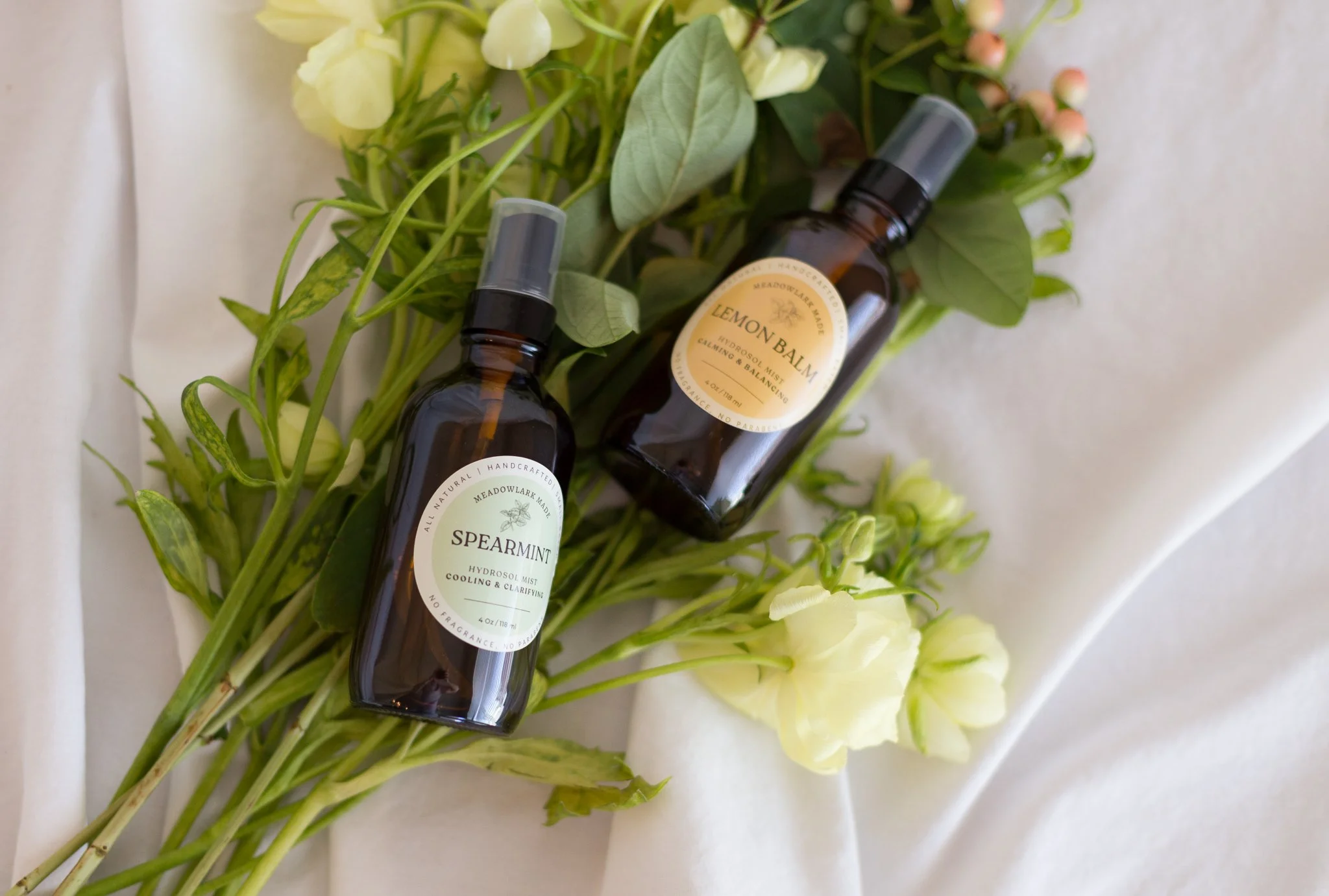
Our Hydrosols
We formulate and source with intention. Every hydrosol in our line is chosen for a specific benefit and every one is made from real plant material, not fragrance water or synthetic replicas.
The one exception in terms of seasonality is Bug Off, which is purely a summer product built for outdoor protection rather than skincare. Everything else in the hydrosol line is available year-round because good skin doesn’t take a season off.
If you’ve never used a hydrosol before, start with one. Cleanse, mist, give it thirty seconds, then carry on with your routine. Do it for a week and pay attention to how your skin feels and how your other products are absorbing. Your skin will explain the rest better than we can.
Browse our hydrosol and facial collection here or come find us every Saturday at the Downtown Des Moines Farmers Market.