

Does Tallow Cause Acne or Clog Pores?
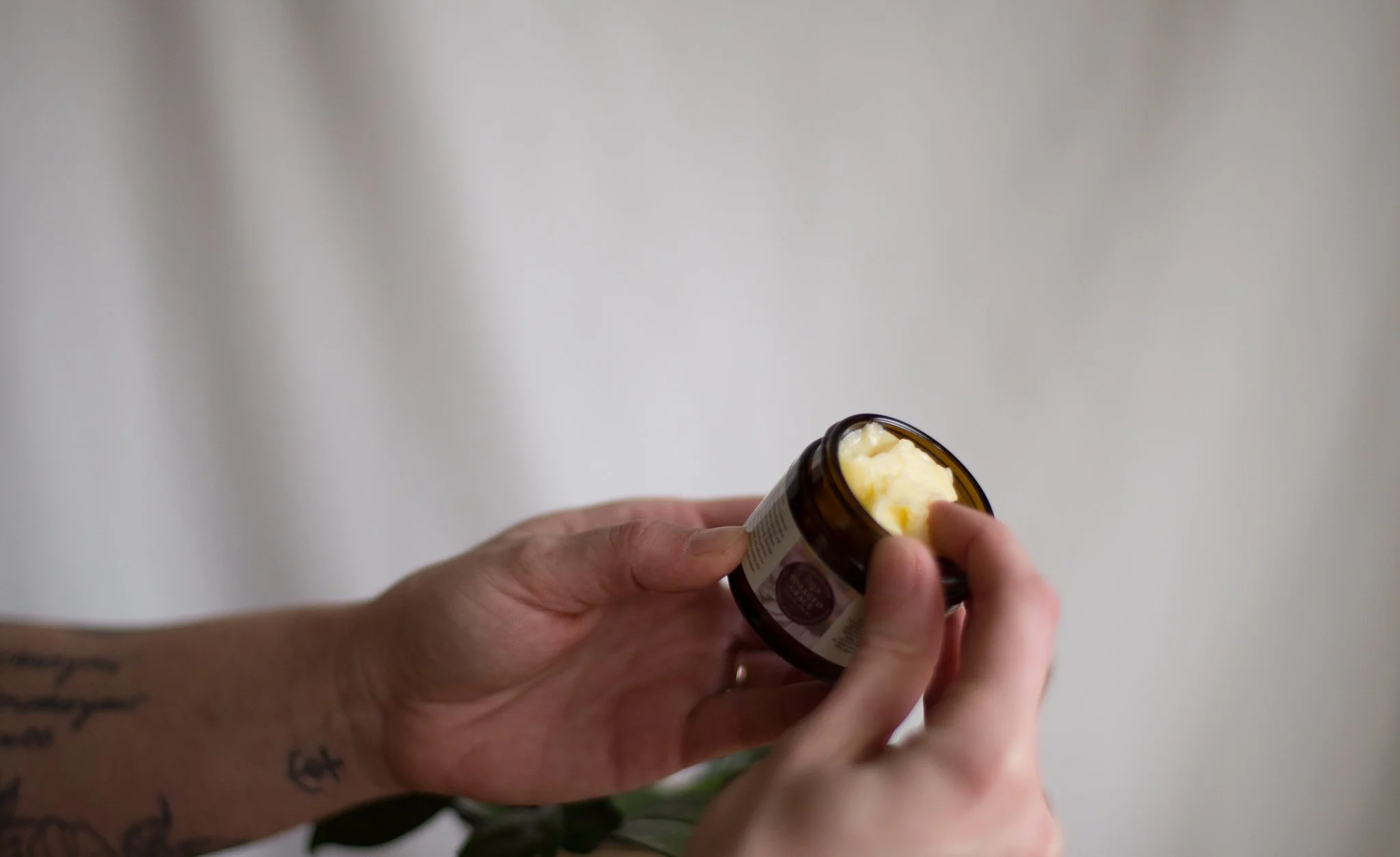
Looking at Pasture-Raised Pork Tallow Through the Lens of Skin Health
Tallow has become one of the most talked-about ingredients in natural skincare. Some people swear it transformed their skin, while others worry it might clog pores or trigger breakouts.
So what’s actually true?
Like most things in skincare, the answer is more nuanced. When we look at skin biology, ingredient quality, and traditional fat rendering, the conversation around tallow becomes much clearer — especially when we’re talking about pasture-raised tallow.
One thing most people don’t realize is that not all tallow skincare is made the same. Many brands purchase commodity tallow that has been heavily processed, poorly rendered, or bleached before it ever becomes a skincare product. At Meadowlark Made, we take a different approach. Our tallow comes from pasture-raised animals we know and raise ourselves. It’s slowly rendered in small batches, just as traditional skincare makers once did.
Let’s take a closer look at what actually causes acne, how tallow interacts with the skin barrier, and why sourcing and formulation matter more than most people realize.
What Actually Causes Acne?
Before we talk about tallow, it helps to understand what causes acne in the first place.
Acne typically develops when several factors overlap:
excess oil production
hormonal changes
clogged pores
inflammation
acne-causing bacteria
disruption of the skin barrier
Many modern acne treatments focus on aggressively drying the skin or using strong exfoliants to remove oil. While these treatments can sometimes help in the short term, they can also weaken the skin barrier.
When that barrier becomes compromised, the skin often responds by producing even more oil — which can make the cycle worse.
As many holistic estheticians say:
“Angry skin often produces more oil.”
Healthy skin needs moisture and a strong lipid barrier to regulate itself properly. Supporting this barrier, along with considering diet, hormones, stress, and gut health, can help the skin balance naturally.
The Gut–Skin Connection
Another important piece of the acne conversation is the gut–skin axis.
Research increasingly shows that the health of the digestive system and the skin are closely connected. Imbalances in the gut microbiome can contribute to inflammation throughout the body, which may appear on the skin as acne, dermatitis, or other chronic irritation.
Several studies have found links between gut microbiome disruption and inflammatory skin conditions.
You can explore the research through the National Institutes of Health here.
This is one reason many holistic skincare practitioners look beyond topical products alone. Skin health is often influenced by a combination of:
nutrition
gut health
hormones
stress levels
the strength of the skin barrier
Topical skincare like tallow can support the skin barrier, but long-term skin health often benefits from supporting the body as a whole.
Skin Starts in the Gut: Holistic Tips for Acne, Eczema, and Dermatitis
Why Traditional Fats Work So Well With Skin
One reason tallow has returned to the skincare conversation is because of its remarkable compatibility with human skin. Our skin naturally produces an oil called sebum, which protects the skin barrier and helps maintain hydration.
Tallow contains many of the same fatty acids found in human sebum, including:
oleic acid
palmitic acid
stearic acid
These fatty acids help reinforce the outer lipid barrier of the skin, which keeps moisture in and irritants out.
Tallow is also naturally rich in fat-soluble vitamins A, D, E, and K, nutrients that support skin repair and resilience.
When skin is properly nourished and protected, inflammation often begins to calm and the skin becomes more balanced over time.
More on the Benefits of Pork Tallow
Does Tallow Clog Pores?
This is the question most people are really asking.
Pork tallow is incredibly similar to human sebum. Unlike the sebum produced by your own skin, tallow does not contain acne-causing bacteria, so it isn’t inherently responsible for breakouts.
Some dermatologists caution that animal fats like beef tallow may feel heavy for acne-prone skin, since thick occlusive ingredients can potentially trap oil and debris in pores if applied excessively.
Tallow is typically given a comedogenic rating of about 2 on a scale from 0–5.
0–1: generally considered non-comedogenic (very unlikely to clog pores)
2: low to moderately low risk (most people tolerate it well)
3–5: increasing likelihood of clogging pores for some skin types
A rating of 2 places tallow in the same general range as several common skincare ingredients that most people tolerate without issue, such as sweet almond oil, avocado oil, and certain forms of vitamin E.
For many people, well-formulated tallow does not clog pores. In fact, because its fatty acid profile is similar to the lipids naturally found in our skin, it can help support a healthy skin barrier. Like with any skincare product, skin types vary widely, and an ingredient that works beautifully for one person may cause congestion for another, which is why quality ingredients and thoughtful formulation matter.
If you're curious about comedogenic ratings and how they’re measured, a helpful explanation can be found here.
Our recommendation: use a very small amount of pork tallow skincare on clean skin and consider exfoliating once a week to help prevent buildup and maintain balanced, healthy skin.
Why Some People Break Out From Tallow
In our experience working with skin — and as farmers who formulate with our own ingredients — breakouts often have less to do with the fat itself and more to do with how the tallow is sourced, rendered, and formulated.
Several factors can make a meaningful difference.
1) Rendering and Formulation Matter
Rendering is the traditional process of slowly melting fat so it becomes clean and stable.
If animal fat is rendered too quickly or handled improperly, it can retain impurities or moisture. That can lead to oxidation, instability, or microbial growth in finished skincare products.
Some large-scale rendering methods use wet rendering, where water or steam is introduced during processing. While common in industrial systems, this process can leave small amounts of moisture behind if the fat is not carefully refined.
Traditional dry rendering, by contrast, uses low, slow heat to gently melt the fat and allow excess moisture to cook off naturally. When done carefully, this produces a cleaner, more stable tallow that has been valued for generations in both cooking and traditional skincare.
But rendering is only part of the equation. Formulation matters too.
Many tallow-based skincare products include ingredients like honey, hydrosols, or aloe. While beneficial for the skin, these ingredients introduce water and natural sugars, which can create an environment where microbes may grow if the formula is not properly preserved.
A common misconception in natural skincare is that essential oils or vitamin E act as preservatives. While they can slow oxidation, they are not broad-spectrum preservatives and do not reliably prevent microbial growth in products that contain water.
Careful rendering, thoughtful formulation, and proper ingredient balance all play a role in creating a safe and stable skincare product.
2) Not All Animal Fat Is the Same
Different parts of the animal produce very different fats.
Traditionally, two of the most prized fats are:
suet, the kidney fat from cattle used to make high-quality beef tallow
leaf fat, the delicate fat surrounding the kidneys of pigs used for skincare
Both have long been valued because they render into nourishing, stable fats.
By contrast, backfat or trim (the fat just beneath the skin) contains more connective tissue and often has a stronger aroma. Because it’s more abundant, some large-scale products use mixed or lower-grade fats simply because they are easier to source. Lower quality fats from general trimmings can be more prone to oxidation. When fats are overly processed or sit for long periods before rendering, they can lose many of the beneficial properties that make traditional tallow skincare so supportive for the skin barrier.
Another factor many people don’t realize is where the fat itself comes from. Not all businesses making tallow skincare are farmers or directly connected to the animals the fat comes from. Some brands purchase bulk tallow through large suppliers, where the origin of the fat and how it was processed may be less transparent. This is one of the reasons sourcing matters. High-quality, properly rendered tallow behaves very differently than commodity fats used in mass-produced products.
For skincare, fat quality and sourcing matter, because the handling and rendering process can influence how the final ingredient performs on the skin.
3) Ingredient Combinations Matter Too
Another reason some tallow products may feel heavy on the skin is because of the ingredients blended with them.
Some balms include large amounts of highly comedogenic oils such as coconut oil or thick waxes, which can increase the likelihood of clogged pores.
Thoughtful formulation makes a significant difference in how a product feels and performs on the skin.
4) Over-Application
Tallow is incredibly concentrated, and most people use far more than they need.
For facial use, a pea-sized amount is usually enough for the entire face. Applying too much of any rich moisturizer — even plant-based ones — can lead to congestion.
Is It a Breakout or Skin Adjustment?
When people try a new skincare product, it’s common to closely watch how their skin reacts. If small breakouts appear, it’s natural to assume the new product caused them.
In reality, skin reactions can happen for a variety of reasons. Changes in routine, barrier repair, hormonal fluctuations, or even applying too much product can temporarily affect how the skin behaves.
Unlike strong exfoliating treatments such as retinoids or chemical acids, tallow itself does not typically cause traditional “skin purging.” However, if the skin barrier has been previously damaged or overly dried by harsh treatments, introducing a richer moisturizer can sometimes shift how the skin regulates oil and hydration.
In many cases, allowing the skin time to rebalance (while using a very small amount of product) can help determine whether the skin simply needed time to adjust or whether a different moisturizer may be a better fit.
As with any skincare ingredient, paying attention to how your own skin responds is the most important guide.
Why Pasture-Raised Pork Tallow Is Different
Like we’ve said, not all animal fats are created equal.
At Meadowlark Made, we work with pasture-raised pork tallow from our own family farm, and that sourcing matters.
Animals raised outdoors develop fat influenced by their environment — fresh air, natural forage, and sunlight. Pigs that spend their lives rooting in pasture produce fat that renders into a soft, creamy tallow that absorbs easily into the skin.
Pasture-raised pork fat can also contain meaningful levels of vitamin D, a nutrient linked to skin health and inflammation balance.
For us as farmers and formulators, that connection between sun, soil, animals, and skincare is part of what makes traditional ingredients like tallow so special.
Tallow Isn’t an Acne Treatment — But It Can Support Skin
It’s important to be honest here.
Tallow is not a medical acne treatment like benzoyl peroxide or prescription retinoids.
But it can help support the skin barrier, which plays a major role in overall skin health.
For many people dealing with irritated or over-treated skin, simplifying their routine and focusing on barrier support can make a noticeable difference.
When the skin barrier is healthy, inflammation often calms and the skin becomes more resilient.
The Bottom Line
Like most things in skincare, there is no single ingredient that works for everyone.
Some people with very oily or acne-prone skin may prefer lighter moisturizers. Others find that nourishing their skin with traditional fats helps restore balance.
What matters most is:
ingredient quality
thoughtful formulation
careful application
and listening to your skin
For us as farmers and formulators, pasture-raised pork tallow represents something beautifully simple — a traditional ingredient shaped by sun, soil, animals, and careful craftsmanship.
Sometimes the oldest remedies still have something to teach us.
If you're interested in traditional tallow skincare made with pasture-raised ingredients, you can explore our formulations using the button below.

Frequently Asked Questions
Is tallow comedogenic?
Tallow is sometimes described as moderately comedogenic, with a rating of about 2 on a 0–5 scale, which is considered low to moderately low. Oils like sweet almond, avocado, and vitamin E are in the same range. Reactions vary by skin type, rendering, formulation, and how much you use. A small amount on clean skin is typically well-tolerated.
Can tallow help acne?
Tallow is not a medical acne treatment. However, it may help support the skin barrier, which plays an important role in calming inflammation and maintaining balanced skin.
Why does pasture-raised tallow matter?
Animals raised outdoors develop fat influenced by their diet, environment, and sun exposure. Pasture-raised pork fat tends to render into a softer, creamier tallow that absorbs easily and contains beneficial fat-soluble nutrients.
How much tallow should you use on your face?
A little goes a long way. For most people, a pea-sized amount is enough to moisturize the entire face.
