People ask us all the time how our tallow is made. The honest answer is slowly, by hand, and starting with pigs we know by name.
Here's the whole journey, from our pasture in Adair, Iowa, to the jar on your bathroom shelf.
It starts with our Kunekune pigs
Kunekunes are a gentle heritage breed from New Zealand and one of the few pigs that can thrive on pasture. They don’t root like typical pigs; instead, they graze. Ours rotate through pastures and eat with the seasons. That outdoor life matters for the fat, too: pigs raised in the sunshine can store more vitamin D in their fat than pigs raised indoors.
Sunlight is part of what makes pasture-raised pork fat worth understanding. If you’re curious how pork tallow compares with beef tallow for skincare, we break down the differences in vitamin D, fatty acid composition, and texture in Beef Tallow vs. Pork Tallow for Skin.
We tell the whole story of how we raise them, from their seasonal diet to our regenerative grazing, in The Grazers Behind Our Sustainable Skincare.
Why we use leaf fat
Not all fat on a pig is the same. Leaf fat is the soft fat that sits around the kidneys. It's the cleanest, mildest, and smoothest fat on the animal, and it has been prized for generations for that reason.
Back fat and trimmings can carry more scent and impurities. Our pigs are processed at Guthrie County Quality Meats, a local butcher shop. Then the leaf fat comes home to our farm, where we trim and render it ourselves.
Leaf fat from our pasture-raised pigs going the through grinder, then rendered into golden pork tallow on our Iowa farm
How we dry-render it
We use a traditional method called dry rendering. That means we melt the fat over low, gentle heat without adding any water.
Here's what happens:
1 We trim and grind the leaf fat into small pieces so it melts evenly.
2 It melts slowly over low heat. Rushing it with high heat can scorch the fat and leave a stronger smell.
3 We strain out the solids, leaving pure, golden liquid tallow behind.
4 It cools into a soft, creamy white fat. We never bleach or deodorize it.
Pouring a pork tallow herbal salve, whipping tallow into body butter, and piping it into jars of finished whipped body butter
Why the method matters
No water means a more stable tallow. Water left in fat can shorten its shelf life and invite spoilage. Dry rendering takes longer, but it gives us a cleaner, more stable base for skincare.
Low heat keeps it gentle. Slow, low-temperature rendering is kinder to the fat than high-heat or industrial methods. It helps keep the fat's natural character, its creamy texture, and its mild scent intact.
Nothing is stripped out. Because we don't bleach or deodorize, our tallow stays as close to its natural state as possible. What you get is simply rendered leaf fat, nothing added and nothing taken away.
Will I smell like bacon?
No! Slow-rendered leaf fat has a very mild, clean scent. Even our Bare Balm, made with no herbs or essential oils, smells clean and neutral. In our scented products, you’ll smell the herbs and essential oils we add, not the tallow.
Nothing goes to waste
The same pigs that feed local families also give us the fat for our skincare. Using the whole animal is how we honor the animals we steward and keep waste off the farm. Read more in Nose to Tail.
From our farm to your skin
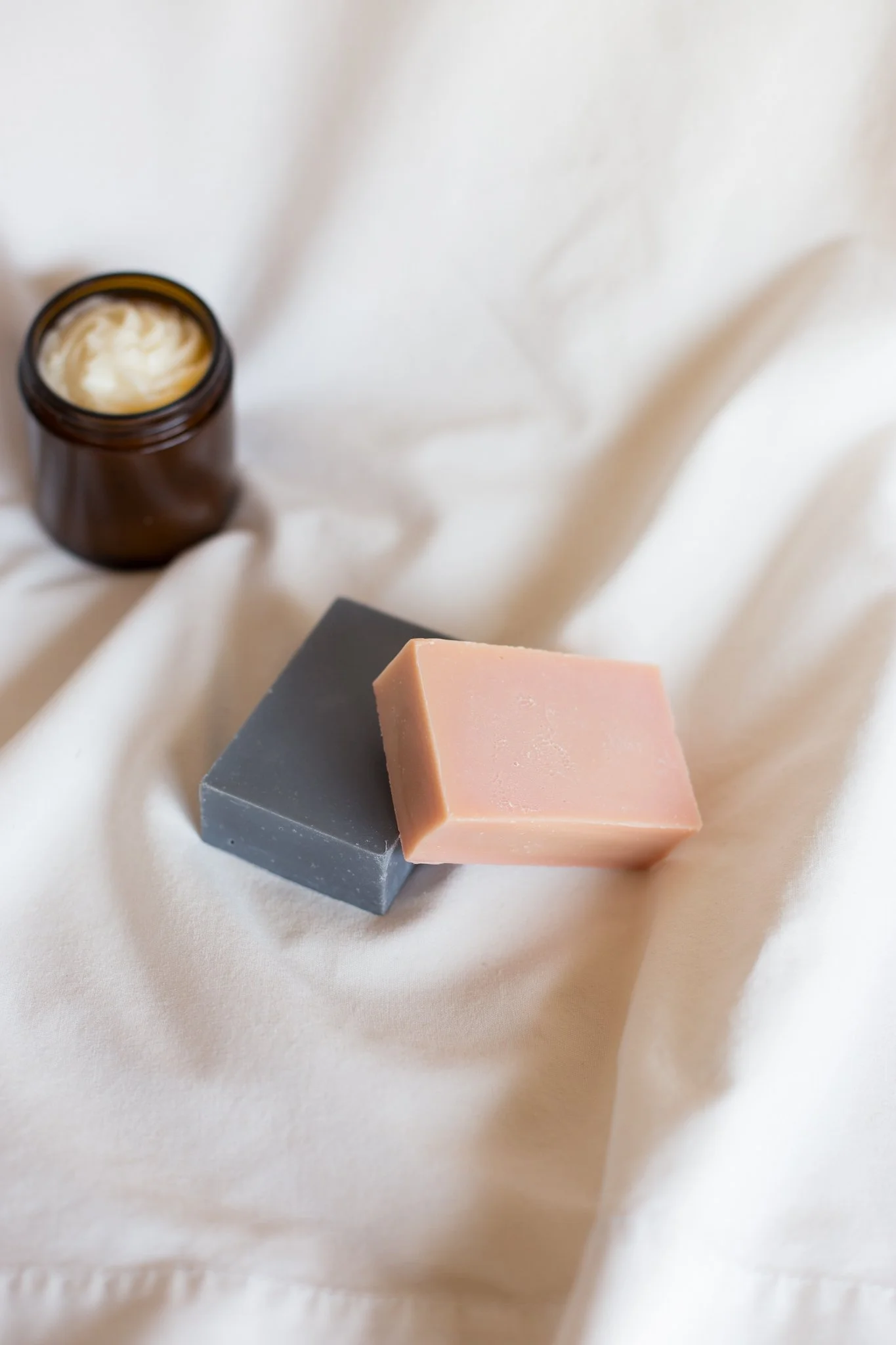
Once it’s rendered, our tallow becomes the base for our balms, soaps, body butters, salves, and lip balms. We blend it with local beeswax, organic plant oils, and herbs from our farm and the prairie around it.
Want to know what all that tallow actually does for your skin? Read Why We Use Pork Tallow in Our Skincare.