

Beef Tallow vs Pork Tallow for Skin
A Closer Look at Two Traditional Fats in Ancestral Skincare
As tallow skincare has made its quiet return to the natural beauty world, one question comes up again and again:
Is beef tallow or pork tallow better for skin?
Both have deep roots in traditional skincare. Long before modern lotions and emulsifiers, people relied on simple rendered fats to protect their skin from harsh weather, dryness, and daily work outdoors.
But while both are deeply nourishing, they are not identical. Their nutrient profiles, texture, and skin feel are quite different.
At Meadowlark Made, we work exclusively with pasture-raised pork tallow from our own farm—and there are a few important reasons why.
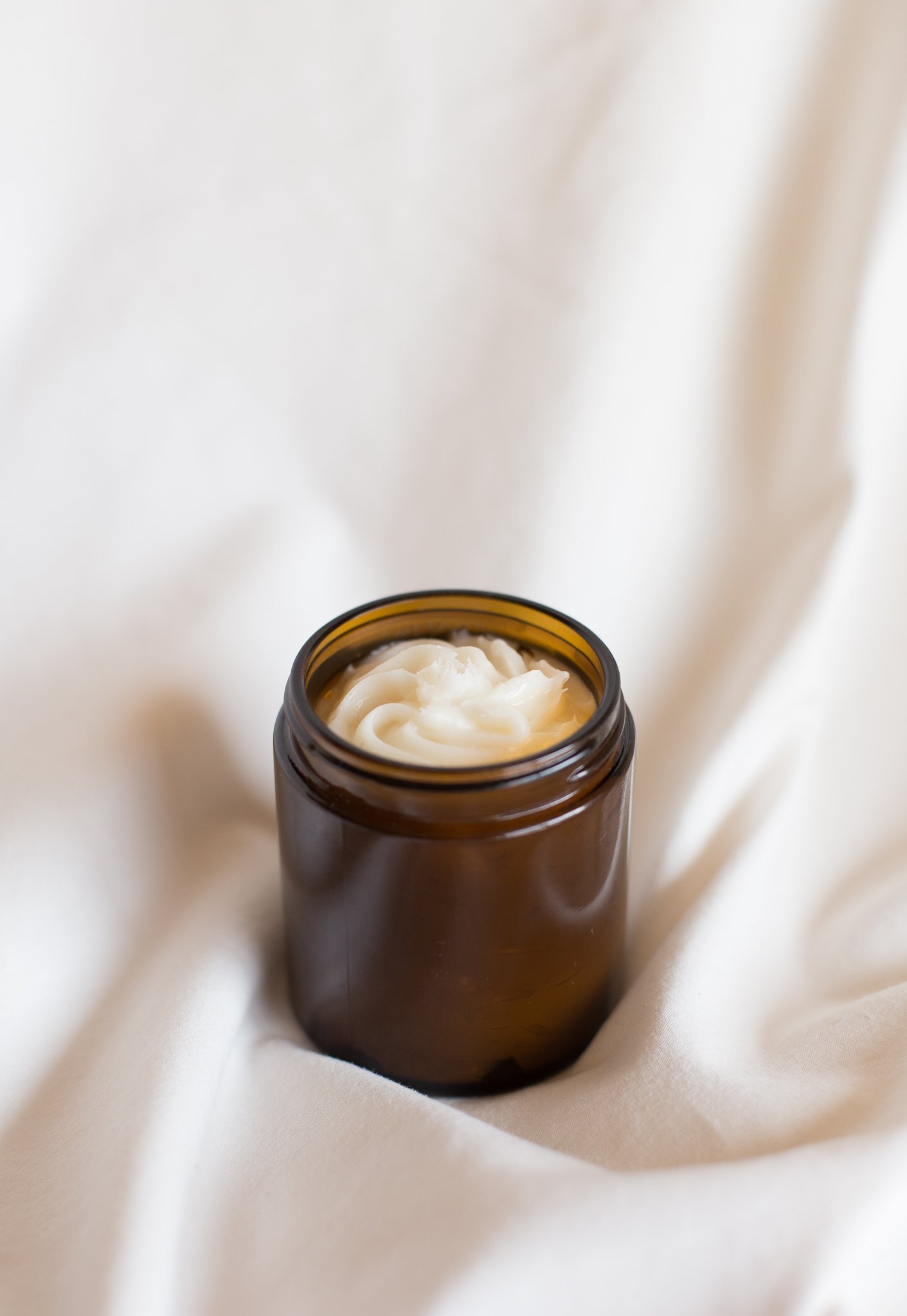
The Shared Benefits of Tallow for Skin
First, it helps to understand why tallow has been used for skincare for centuries.
Tallow contains a blend of fatty acids that closely resemble the lipid structure of human skin. This allows it to absorb easily and support the skin’s natural barrier rather than sitting heavily on the surface.
Animal fats also naturally contain fat-soluble vitamins like A, D, E, and K, along with beneficial fatty acids that help maintain moisture and support overall skin function.
This compatibility is one reason many people turn to tallow-based skincare for:
dry or weathered skin
compromised skin barriers
simple, minimalist routines
But once you look a little closer, the differences between beef and pork fat begin to matter.
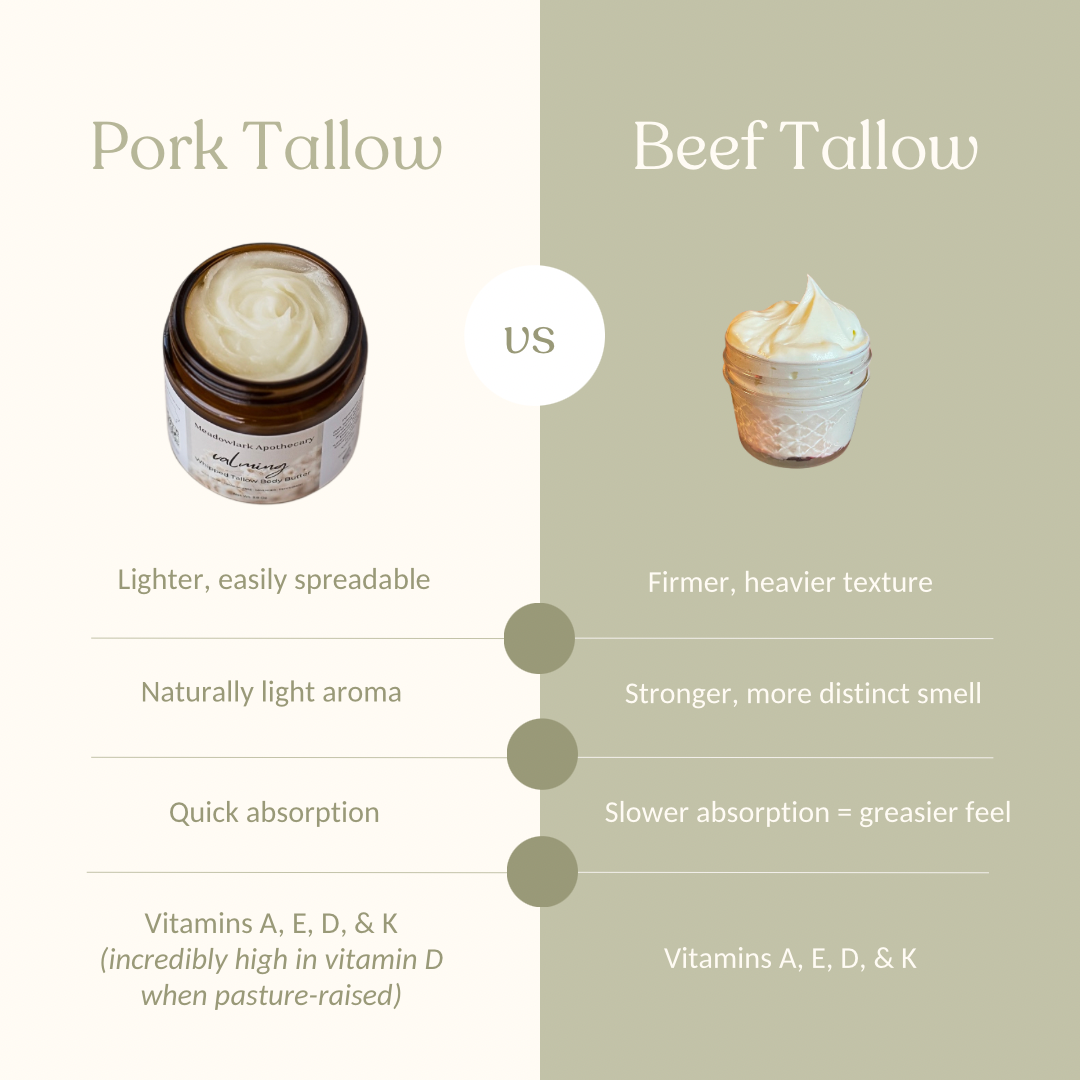
Pork Tallow Contains Remarkably High Levels of Vitamin D
One of the most fascinating differences lies in vitamin D.
Pigs are exceptionally efficient at producing and storing vitamin D when they live outdoors in the sun. Because vitamin D is fat-soluble, it becomes concentrated in their fat.
In studies examining pasture-raised pork fat, levels have been measured between 400–700 IU of vitamin D in some cases—a surprisingly rich natural source.
Vitamin D plays an important role in skin health, helping support:
healthy skin cell turnover
barrier repair
calm, balanced skin function
While beef tallow and pork tallow contain similar fat-soluble vitamins, pork fat often contains higher vitamin D levels when animals are raised on pasture.
For us as farmers, that connection between sunlight, pasture, and skin nourishment feels especially meaningful.
A Softer, Creamier Texture
The next difference is something you can feel immediately.
Beef tallow is quite firm. It tends to be dense and waxy at room temperature due to its higher proportion of saturated fats.
Pork tallow, by comparison, contains more oleic acid and monounsaturated fats, giving it a softer, more spreadable consistency.
This creates a texture that is:
smoother
creamier
easier to work with
faster absorbing on the skin
For facial products especially, this lighter feel can be far more comfortable and elegant.
The Neutral Aroma
Another noticeable difference is scent.
Even when carefully rendered, beef tallow often retains a stronger natural aroma, which is why many products rely on essential oils or added fragrance.
Properly rendered pork tallow, especially when sourced from healthy animals and handled carefully, is typically very mild and neutral.
This allows herbal infusions and botanicals to shine without needing to mask the base ingredient.
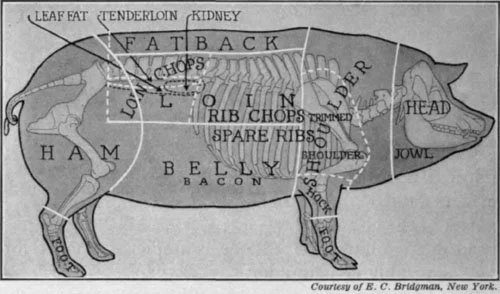
Suet vs. Leaf Fat: Why the Source of Fat Matters
Not all animal fat is the same—and this is an often-overlooked detail.
In pigs, the highest-quality fat is leaf fat, which surrounds organs like the kidneys. In cows, the equivalent is called suet.
Leaf fat is especially prized because it is:
the most pure and clean fat
naturally mild in scent
exceptionally smooth in texture
lower in impurities compared to general back fat or trimmings
This is the fat traditionally used for the finest skincare.
Many modern tallow products (both beef and pork) are made from mixed or lower-grade fat trimmings, which can affect both scent and skin feel.
At Meadowlark Made, we focus specifically on high-quality pork leaf fat, slowly rendered using a traditional dry method. This preserves the integrity of the fat without introducing excess moisture, which can compromise shelf stability.
It’s a slower process—but one that results in a noticeably cleaner, more stable, and more skin-compatible product.
A Note on “Tallow” vs “Lard”
You might typically hear people nowadays refer to tallow as rendered fat from cattle or sheep, while insisting lard refers to rendered pork fat.
However, historically the language wasn’t always so strict. In many butcher shops and homesteads, rendered fat of various kinds was often referred to more generally as “tallow.”
Today, in the natural skincare space, “tallow skincare” has become a widely recognized term for products made with traditional rendered animal fats.
Because of this, we use the term pork tallow to help people easily recognize what we offer and find us when searching for tallow-based, ancestral skincare.
At its core, though, it’s beautifully simple:
slow-rendered pork leaf fat from pasture-raised animals, crafted the traditional way.

Why We Choose Pasture-Raised Pork Tallow
At Meadowlark Made, our tallow begins on our small, family farm with pasture-raised Kunekune pigs.
These animals spend their days:
rooting through pasture
grazing grasses and forage
living outdoors in fresh air and sunlight
That lifestyle matters.
Sun exposure supports higher vitamin D levels, while a natural diet contributes to a balanced fatty acid profile.
The result is a fat that is:
nutrient-dense
naturally stable
beautifully creamy
deeply compatible with the skin
It’s a simple ingredient with a long history; one that connects old-world wisdom, modern skin science, and life on a small prairie farm.
A Return to Simple Skincare
At the end of the day, both beef and pork tallow have a long history in traditional skincare.
But for us, pork tallow offers something special.
A softer texture.
A naturally mild scent.
And a unique nutrient profile shaped by sun, soil, and pasture.
It’s one of the quiet ways the land itself becomes part of the skincare we make.
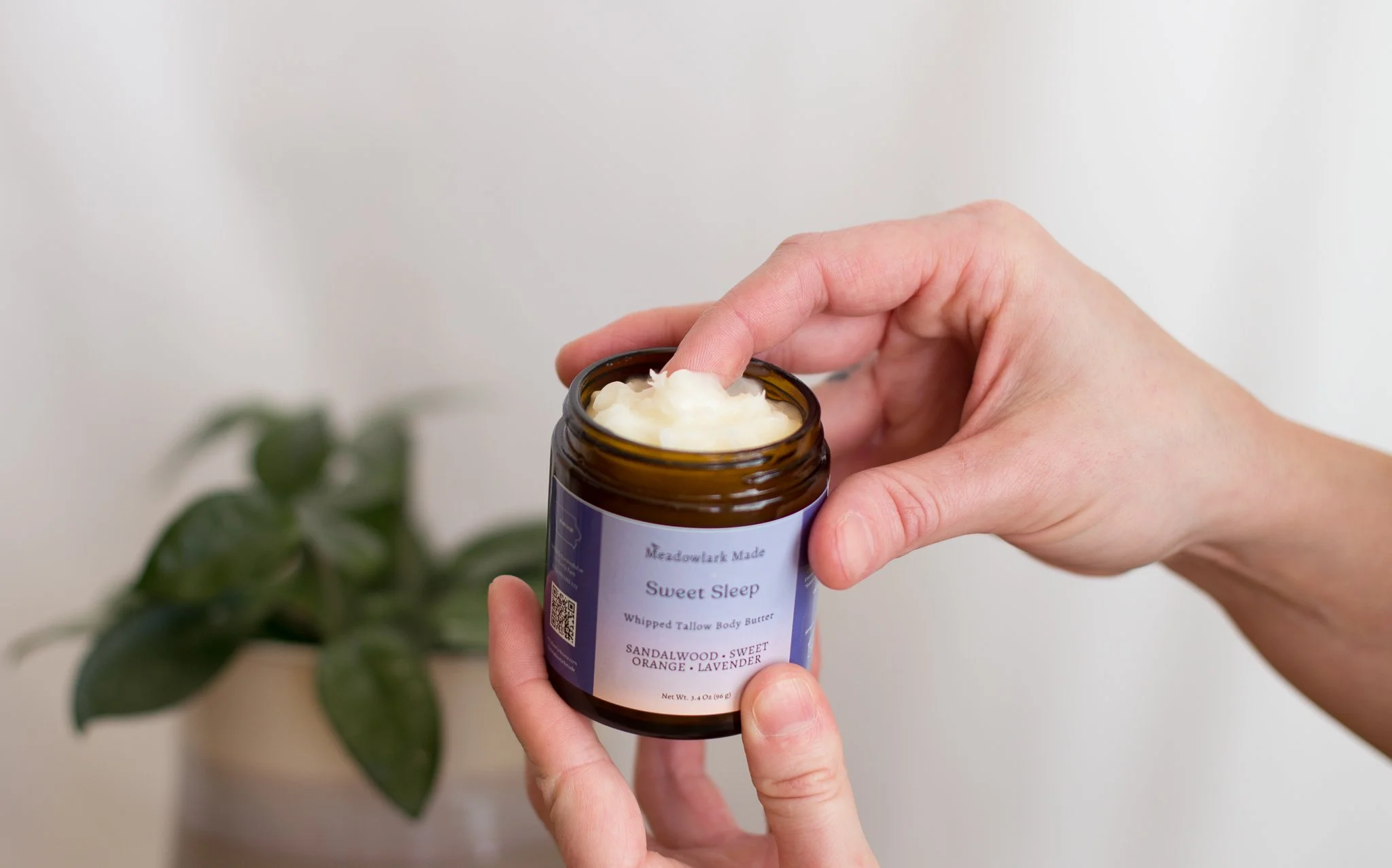
More Information
Free range pig: the vitamin D powerhouse — McGie Homestead Adventures
Sun exposure in pigs increases levels in Vitamin D — National Library of Medicine
The benefits of pasture-raised pork tallow — Meadowlark Made
