Your Summer Skin Routine (The 4-Step Method We Use Every Single Day)
Summer is hard on skin. Most people don’t realize how much until they’re already dealing with the breakouts, the dullness, the random sensitivity that wasn’t there in April. The heat is relentless. You’re sweating more. You’re outside more. Your skin is working harder than it does any other time of year and most routines weren’t built for any of that.
We kept ours simple on purpose. Not because skincare has to be simple, but because when something works, you don’t need to add more to it. Four steps. Real ingredients. Nothing your skin has to fight through to get to the good stuff.
This is what we use every single day and why each step earns its place.
Step 1: Cleanse with a Facial Bar Soap
This is where most people go wrong in summer. The instinct is to reach for something foamy, something that feels like it’s really cleaning. A lot of those cleansers are loaded with sulfates and detergents that do clean, but they clean everything including the oils and lipids your skin barrier actually needs to function. You rinse, your face feels tight, and within an hour your skin is either dry and flaky or compensating with excess oil. Neither is what you were going for.
A well-made bar soap doesn’t do that.
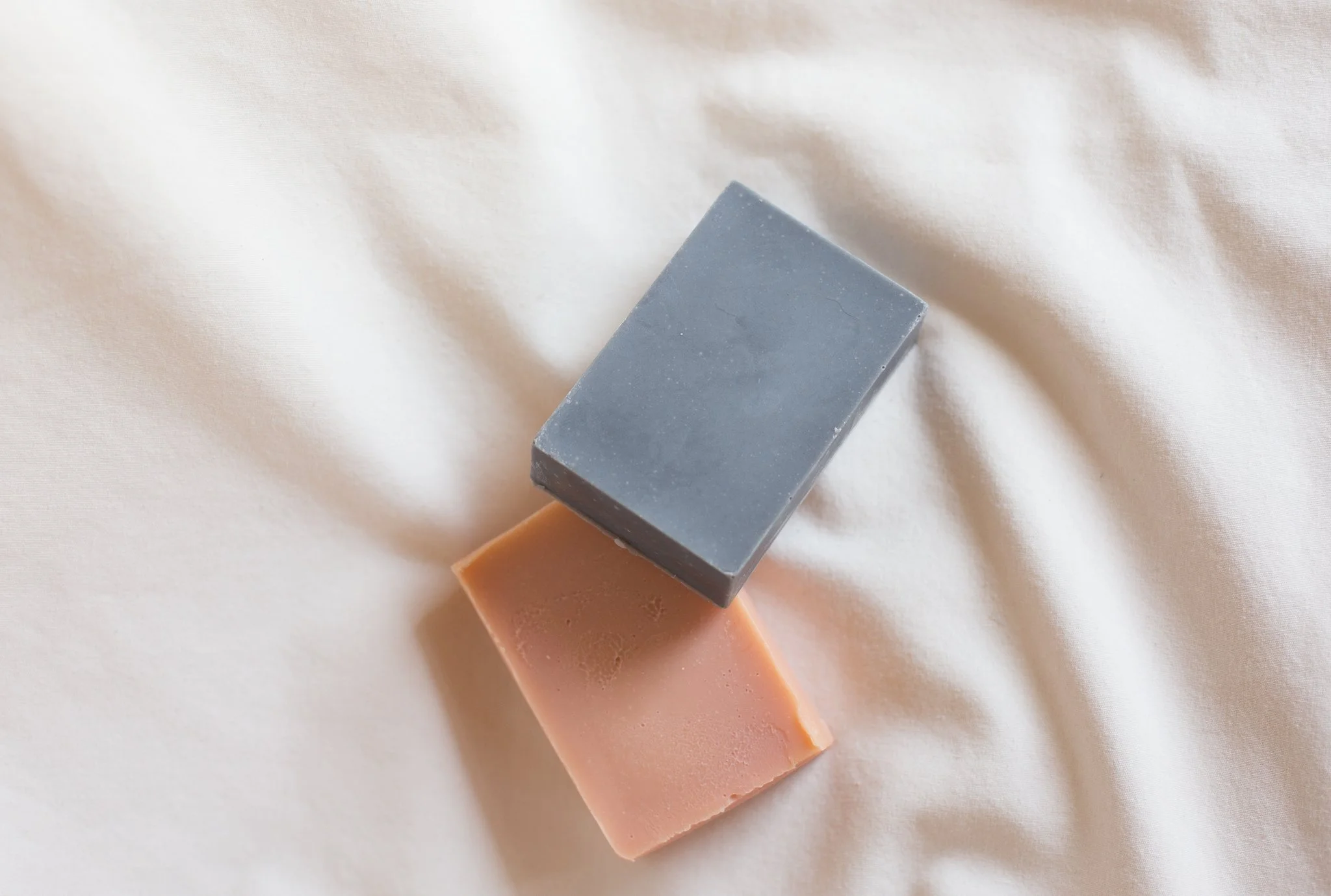
Ours is formulated with skin-loving oils and fats that lift dirt, sweat, and buildup without stripping the barrier underneath. You still get a genuinely clean feeling. You don’t get the squeaky, dried-out aftermath that sends your skin into panic mode. In summer especially, when you’re sweating more and spending time outside, your cleanser needs to actually work without taking everything with it. This one does.
The application is exactly what you’d expect. Wet your face. Lather the bar in your hands. Apply gently with your fingertips. Rinse with cool or lukewarm water. That’s it. No complicated technique. No second cleanse required unless you’re wearing heavy sunscreen or makeup. Just clean skin that still feels like skin.
One thing worth noting: bar soap has a reputation for being harsh and drying and that reputation is earned, just not by the right kind of bar soap. Most mass-market bars are detergent in a solid form. They’re formulated to strip efficiently, they foam well, and they leave your skin feeling tight because that’s what they were designed to do.
Cold process soap made with quality fats behaves completely differently. The saponification process that turns oils and fats into soap also produces glycerin as a natural byproduct. Glycerin is a humectant. It draws moisture to the skin and it’s a big part of why a properly made bar leaves skin feeling clean and soft at the same time. Commercial manufacturers typically remove that glycerin and sell it separately. It stays in ours. You feel the difference the moment you rinse.
Step 2: Hydrosol
If you skip this step you’re leaving a lot on the table. We say this to people at the market all the time and we mean it every single time.
A hydrosol is a botanical water. It’s the water-based byproduct of steam distillation, which is the same process used to make essential oils. When plant material is distilled, two things come out. The concentrated essential oil and a gentler, water-soluble fraction that carries its own set of plant compounds. That’s the hydrosol.
It’s not a toner. It’s not flower water. It carries real botanical compounds in a form dilute enough to apply directly to skin without irritation. It smells like the plant because it is the plant, just in a gentler format.
Here’s why it matters in your routine specifically. When you cleanse your face, even with a gentle cleanser, you temporarily shift your skin’s pH. Your skin sits naturally at a slightly acidic pH, and that acid mantle is part of what protects you from environmental stress and keeps moisture in. Cleansing disrupts it. Your skin will rebalance on its own but it takes time and while it’s rebalancing, everything else you apply is absorbing into skin that isn’t quite ready for it.
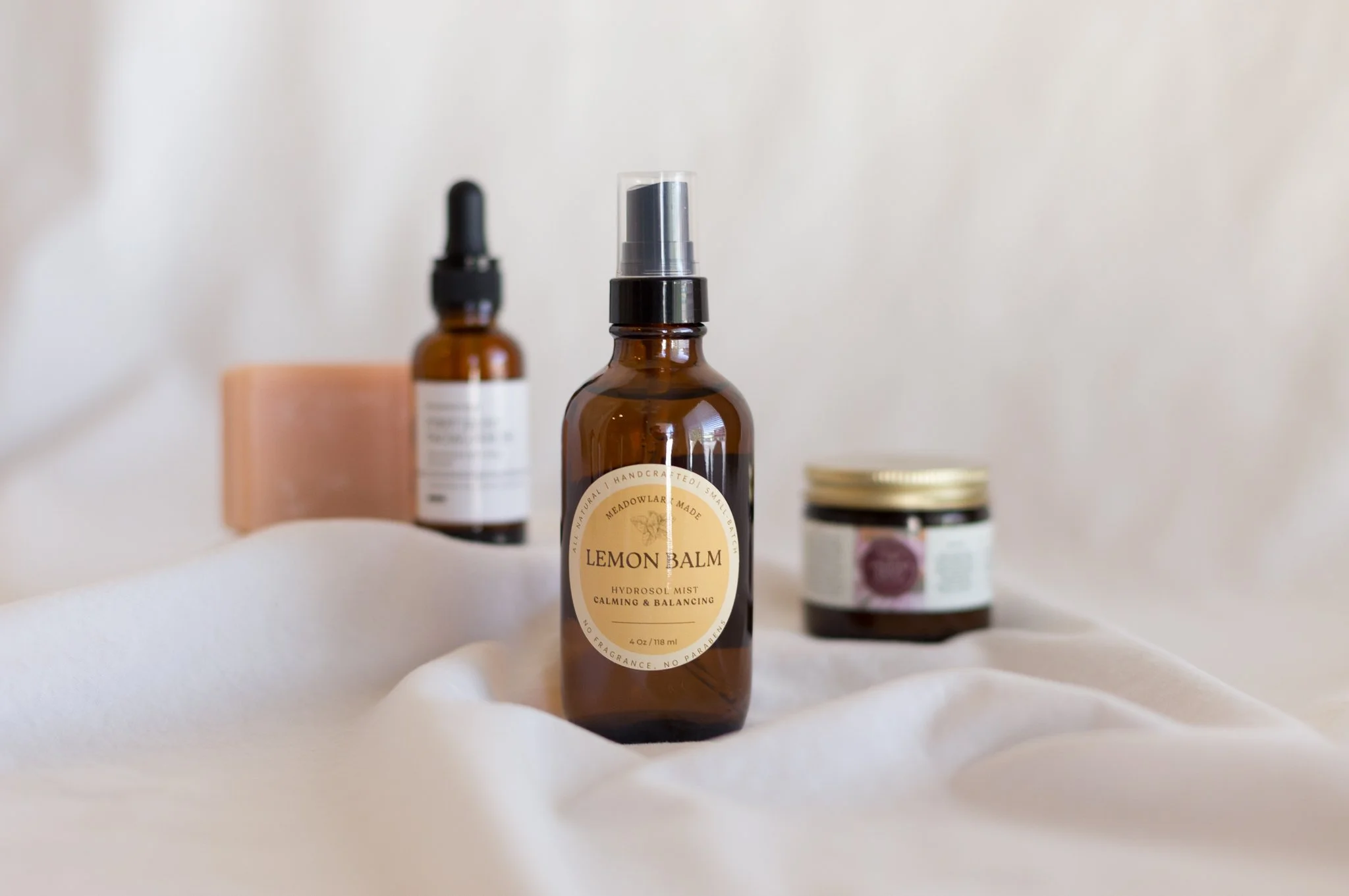
A hydrosol helps your skin move back toward its natural pH faster than it would on its own. You mist it on damp skin right after cleansing, let it absorb, and your skin is back in the right state before your serum even touches it. The difference in how your serum absorbs and performs after a hydrosol versus without one is noticeable once you’ve paid attention to it.
In summer we reach for hydrosols that calm and balance because skin tends to run hotter and more reactive when the temperature climbs. That post-cleanse mist cools things down, adds a layer of botanical hydration, and sets up everything that follows.
Mist it on. Let it sink in for thirty seconds or so. Don’t wait so long that it fully dries before you move to step three. That slight dampness is part of what helps your serum absorb deeper.
Step 3: Serum
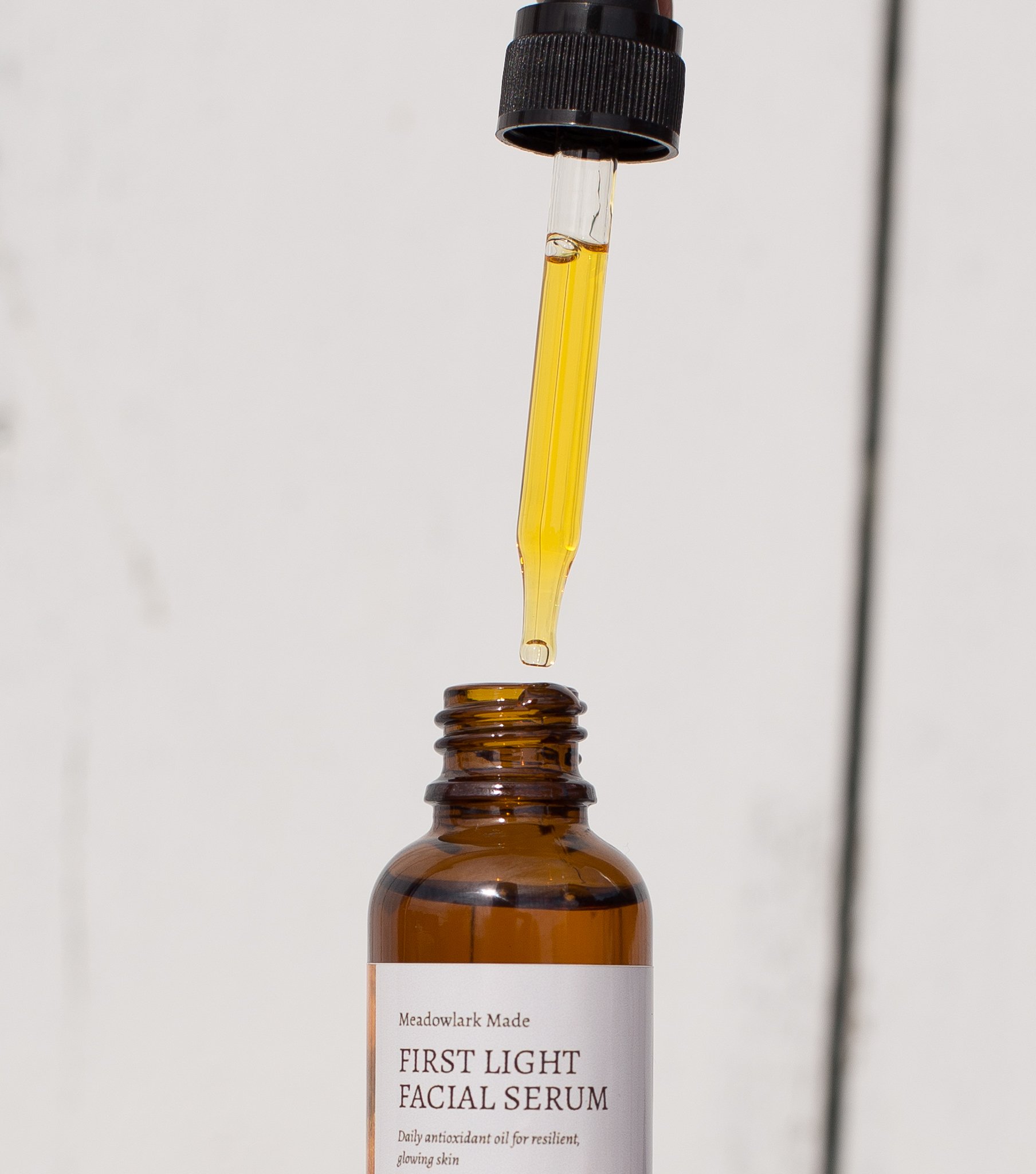
This is your targeted step. It’s where you address whatever your skin specifically needs, whether that’s brightening, barrier repair, smoothing texture, or just maintaining what’s already working. A serum is formulated to deliver active ingredients in a concentrated way, which is why application technique actually matters here more than it does with a cleanser or a balm.
We apply ours while the hydrosol is still slightly damp on the skin. That window of damp skin is when your barrier is most receptive to absorption. The hydrosol has prepped the surface and restored pH and your skin is essentially ready to take in whatever comes next. Applying your serum at that moment means it absorbs more evenly and works more efficiently than if you applied it to fully dry skin.
In summer a lighter hand goes a long way. You don’t need to cake it on. Two to three drops warmed between your fingers, pressed gently into skin rather than rubbed. Give it a minute before moving to the balm. That minute matters. You want it absorbed, not just sitting on the surface when you seal it.
One thing we hear a lot is people wondering whether serums are necessary if they’re already using a balm. The short answer is that they’re doing different things. A serum delivers targeted actives deeper into skin. A balm works at the barrier level to nourish, moisturize, and protect. Both have a job. Neither replaces the other.
Step 4: Facial Balm
Yes, even in summer. We hear the hesitation occasionally. A balm sounds heavy. It sounds like the opposite of what you want when it’s ninety degrees and humid outside.
But here’s what’s actually happening in your skin in summer heat. Transepidermal water loss, the rate at which moisture evaporates off your skin, increases when temperatures rise. Your skin is losing hydration faster than it does in cooler months, even on days when you’re not in direct sun, even when you feel like your skin isn’t dry. The barrier is under more stress and without something to seal it, the hydration from your hydrosol and serum starts to evaporate before your skin can use it.
A thin layer of facial balm changes that. It creates a breathable seal at the barrier level that slows moisture loss and locks in what you’ve already applied. Pork tallow-based balm specifically is well-suited to this because the fatty acid profile is closely aligned with your skin’s own sebum. It doesn’t sit on top of your skin fighting to absorb. It works with your skin’s chemistry, fills in where the barrier has thinned, and does its job without clogging or overloading.
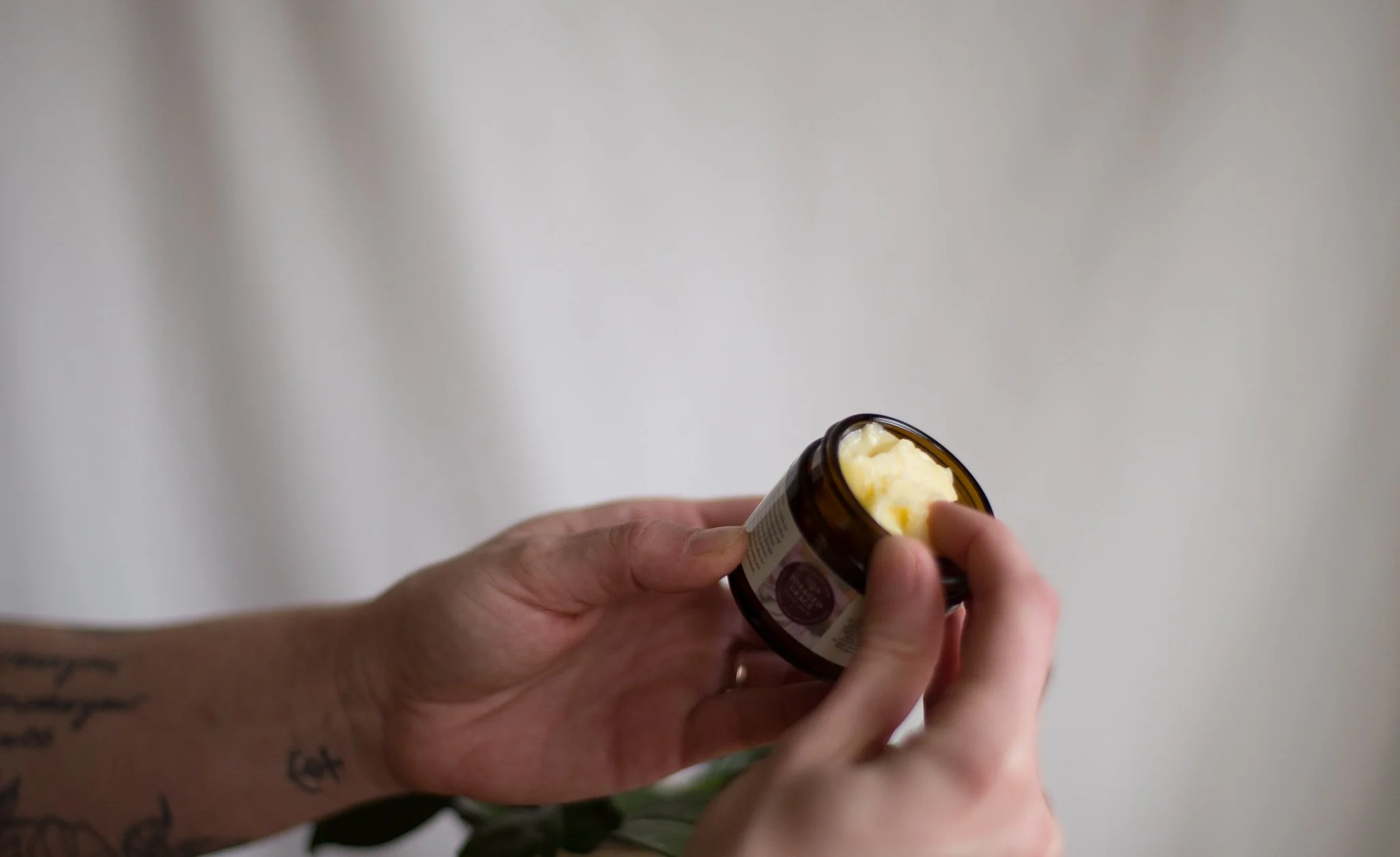
The key word is thin. We’re not talking about a heavy application. A small amount warmed between your fingertips until it becomes almost like a serum in texture, then pressed gently into skin. You should barely feel it. If it feels heavy or greasy, you’ve used too much. Dial it back and try again with a smaller amount. The right quantity for your skin will vary but most people use far more than they need.
Used correctly in summer, a tallow balm doesn’t make your skin feel heavy. It makes your skin feel like it has everything it needs to get through the day.
The Whole Picture
Four steps. Real ingredients. No fillers.
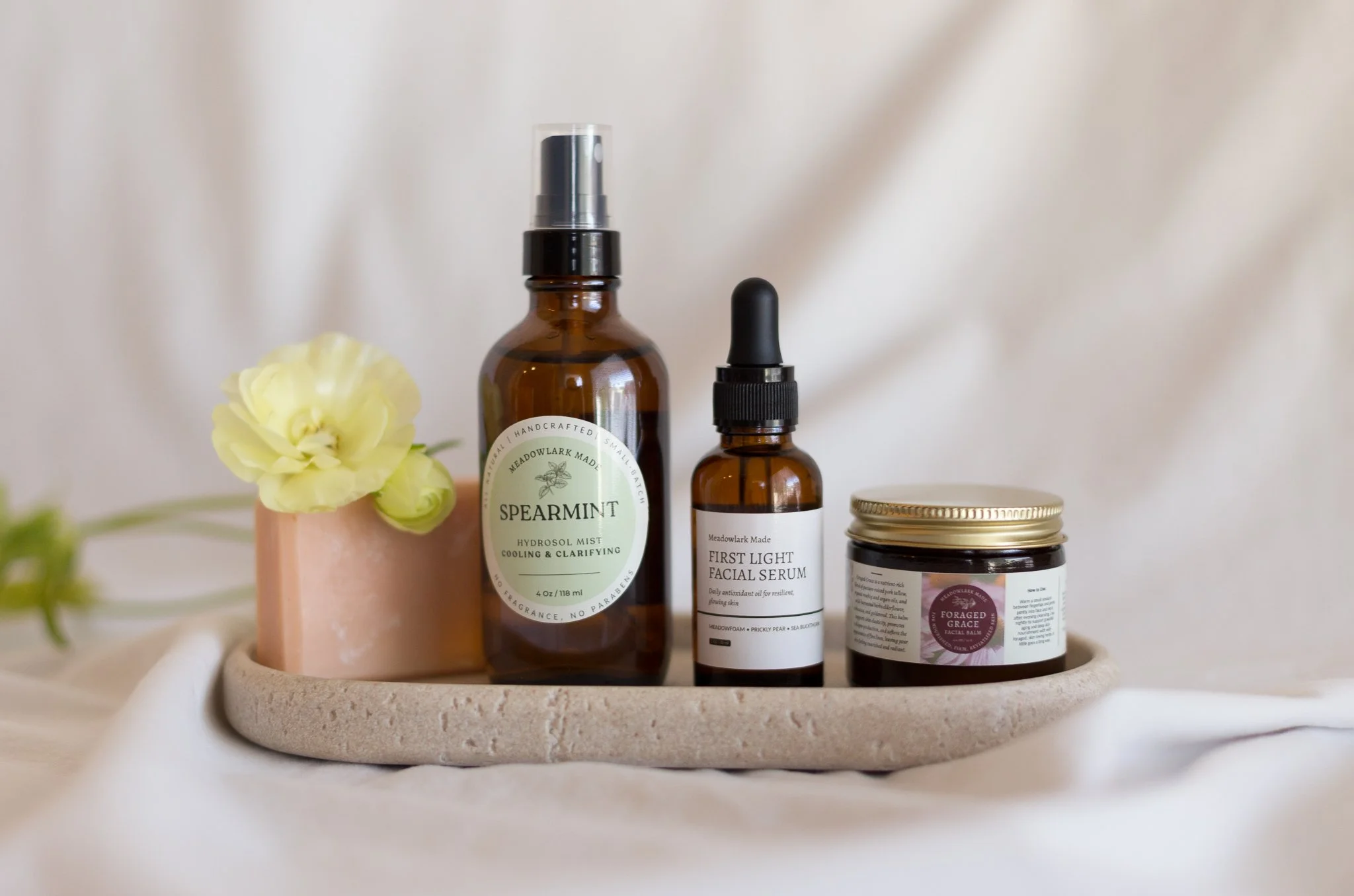
Everything in this routine is doing something specific and nothing is redundant. The soap cleans without stripping. The hydrosol restores pH and preps for absorption. The serum delivers targeted care. The balm nourishes and moisturizes. Each step sets up the next one and the result is skin that’s genuinely supported instead of just treated.
Summer doesn’t have to be hard on your skin. You just need the right routine.
Find everything at the Downtown Des Moines Farmers Market every Saturday, or shop the full line at meadowlarkiowa.com.