What Heat Actually Does to Your Skin (And How to Support It)

Summer feels good right up until your skin starts telling you it doesn’t.
The breakouts that weren’t there in April. The dullness that no amount of water seems to fix. The redness that shows up without a clear reason. The texture that changed overnight. Your skin just feels off and you can’t quite put your finger on why.
It’s not random and it’s not bad luck. Heat changes the way your skin functions, and most of the skin concerns that show up during summer are direct responses to what's happening beneath the surface. Once you understand what's changing, the way you care for your skin starts to make a lot more sense.
What Heat Does to Your Skin Barrier
Your skin barrier is a thin, lipid-based structure at the outermost layer of your skin. It’s made up of skin cells embedded in a matrix of fats including ceramides, fatty acids, and cholesterol. Its job is to regulate moisture loss, protect against environmental stressors, and maintain the slightly acidic environment your skin needs to function. It’s doing all of that constantly and quietly and most people never think about it until it breaks down.
Heat disrupts your skin barrier in a very specific way.
When temperatures rise, transepidermal water loss increases. Transepidermal water loss, or TEWL (the technical term for the evaporation of water through the layers of your skin). It happens constantly at a baseline rate but heat accelerates it. You’re losing moisture through your skin faster than usual, even when you’re not sweating, when you’re sitting in the shade, and when you feel like your skin is fine. This is why skin can simultaneously feel dry and produce excess oil in summer. The barrier is losing moisture faster than it can maintain, sebum production increases to compensate, and you end up with that confusing combination of tight and greasy that doesn’t respond well to most standard approaches.
Sweat adds another layer to this.
Sweat itself isn't the problem. It's one of the ways our bodies cool us down. But when sweat sits on the skin for hours, mixes with sunscreen, makeup, and oil, or gets wiped away over and over throughout the day, it can leave already stressed skin feeling irritated. And if you’re wiping your face repeatedly, or if the mechanical friction of wiping is happening constantly throughout a hot day, it accumulates into real barrier disruption. This is a big part of why summer brings out sensitivity and redness in skin that doesn’t normally behave that way.
Sun exposure adds the third element.
UV radiation breaks down collagen and generates free radicals in the skin, and while that’s a long-game concern, the immediate effect is inflammation. Skin that’s been in the sun is irritated skin, even when it doesn’t look or feel burned. That baseline inflammation compromises the barrier further and makes skin more reactive to everything.
By the middle of summer, your skin is often dealing with all of these things at once. It's losing water more quickly, spending more time in the heat, and trying to recover from repeated sun exposure day after day.
Where Most People Go Wrong
When summer hits and skin starts acting up, the instinct is to strip things back. Reach for a stronger cleanser, skip the richer products, go lighter across the board. The logic makes intuitive sense. It's hot. Less feels right.
The problem is that skin doesn't always work that way.
When you strip your routine back too far, you're often stripping away the support your barrier depends on. A more aggressive cleanser removes some of the lipids that help keep moisture in, and skipping your balm or serum can leave your skin trying to do more with less. As your barrier loses water and lipids, your skin may respond by overcompensating and producing more oil in an attempt to protect itself.
What your skin usually needs in summer isn't less skincare. It needs thoughtful barrier support. Not more products or heavier products, just the right ones used with intention.
What Actually Helps
The first step is cleansing without disrupting the barrier.
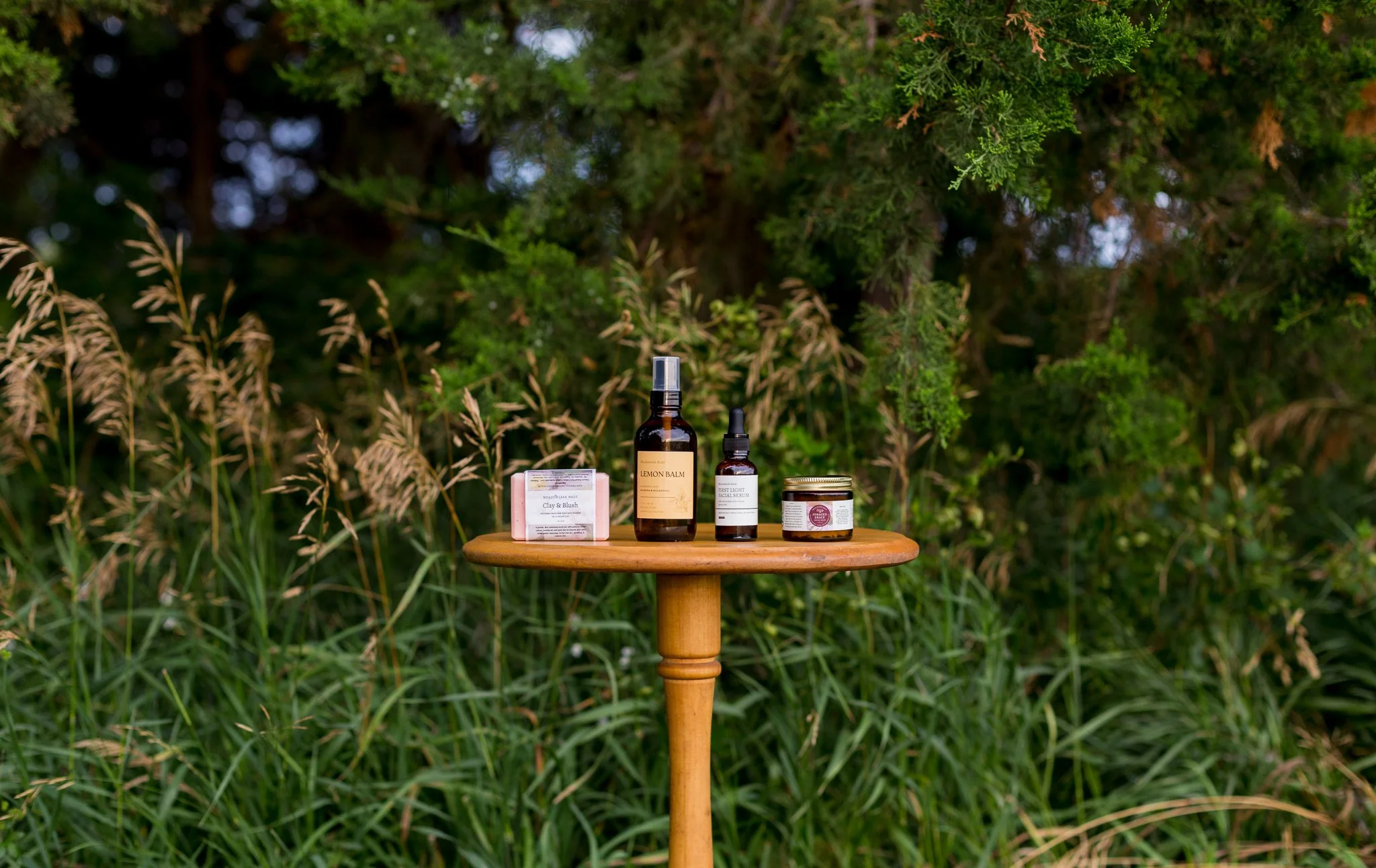
A traditional tallow facial soap effectively removes sweat, dirt, makeup, and daily buildup while still respecting the skin’s natural balance. Unlike many modern cleansers that can leave the skin feeling tight or stripped, traditionally made soaps retain the naturally occurring glycerin created during the soapmaking process. This helps the skin hold onto hydration while the nourishing qualities of tallow leave it feeling clean, comfortable, and supported.
After cleansing, a hydrosol is the next step.
After you wash your face, your acid mantle needs to rebalance. A hydrosol speeds that process up significantly, helping to restore pH almost immediately, delivering hydration, and setting your skin back to a state where everything else you apply after actually absorbs deeper and better. In summer this matters even more because you’re likely washing your face more often, sweating more, and dealing with more disruption overall.
Once your skin is misted and slightly damp, apply your oil serum. Hydration and moisture are two different things, and healthy skin benefits from both. The hydrosol provides the hydration layer, while your serum delivers concentrated botanical oils and plant-based ingredients chosen to support the skin in specific ways.
First Light Serum is designed for your morning step (featuring antioxidant-rich ingredients like sea buckthorn, prickly pear, CoQ10, and vitamin E) to help support the skin as it moves through the day. Moonlit Rest is designed for evening use (with restorative ingredients like rosehip CO2, bakuchiol, butterfly pea flower, and blue tansy) to support the skin during your nighttime routine.
The final step is your tallow facial balm. This is your moisture step, providing the nourishment and support your skin needs to maintain a healthy barrier and stay soft, comfortable, and balanced.
Pasture-raised pork tallow is one of the most effective barrier-supporting ingredients we work with. Its fatty acid profile closely mirrors the composition of many of the fats naturally found in your skin. That structural similarity is one of the reasons it feels so compatible and supportive. Rather than working against your skin’s natural chemistry, pork tallow works alongside it, which is why so many people find it deeply nourishing.
During the summer months, when the skin barrier is often working harder to maintain balance, a very small amount of tallow-based balm can help replenish what the skin needs without feeling heavy or overwhelming.
Lighter application really is part of the answer, but in a specific way. Less product per application, not fewer steps. A thin, intentional layer of serum followed by a small amount of facial balm usually works better than applying too much at once, especially in warmer weather. Warming your balm between your fingers before applying helps it melt beautifully into the skin and spread evenly.
Timing can make a difference too. If you've just come in from the heat, give your skin a few minutes to cool down before you start your routine. Your skin is often less flushed, less reactive, and much more comfortable receiving those nourishing ingredients.
The Simple Version
Cleanse without stripping. Hydrate with a botanical hydrosol. Treat your skin with targeted botanical serums. Moisturize and nourish with a small amount of facial balm to support your skin barrier and keep your skin feeling soft, comfortable, and balanced.
Your skin is not failing in summer. It's responding to conditions that ask more of it. Give it the right support, and it can do exactly what it is meant to do.
Shop everything we reach for in summer here or find us every Saturday at the Downtown Des Moines Farmers’ Market.