

Cleavers: A Spring Herb for Skin and Lymphatic Support
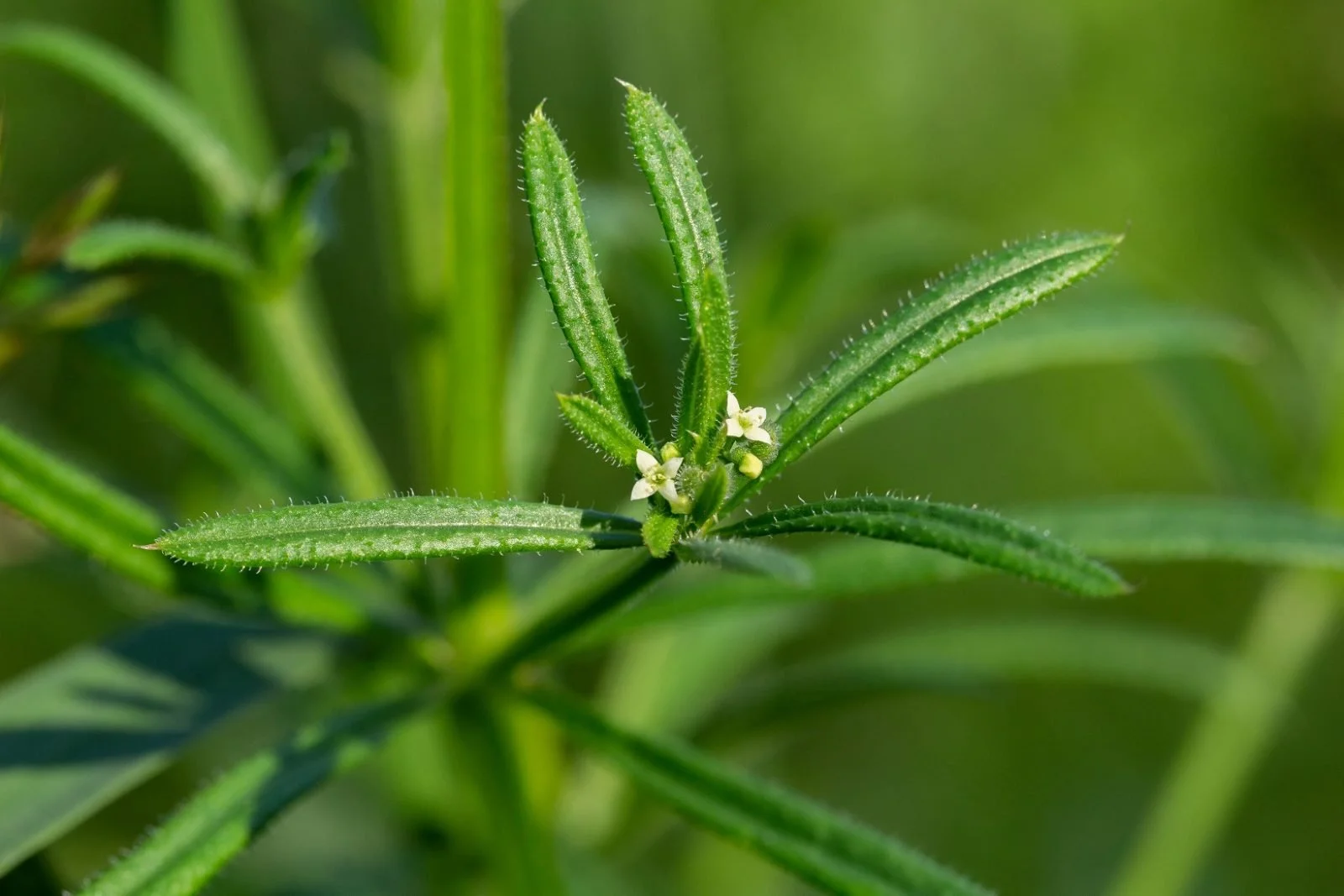
Each spring, as the land begins to wake again, a delicate herb appears among grasses, hedgerows, and garden beds.
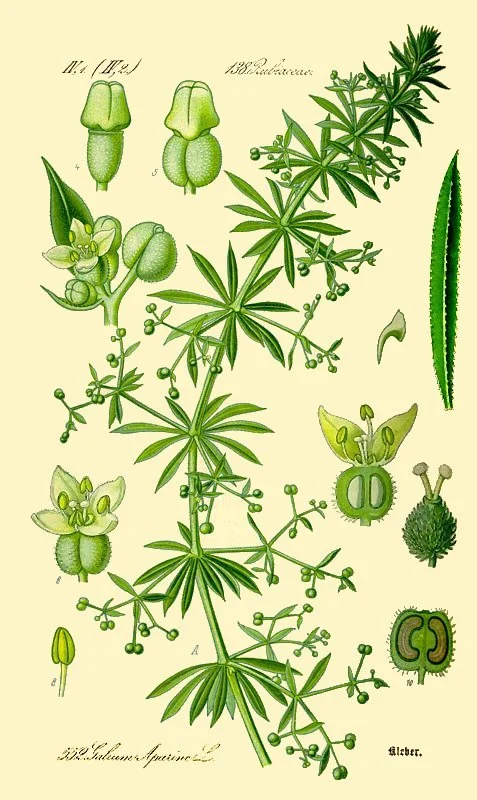
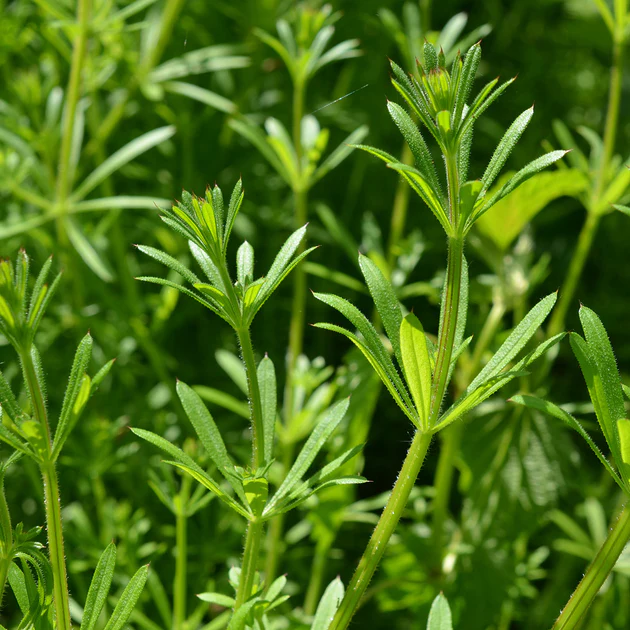
Cleavers (sometimes called sticky weed or goosegrass) gently clings to whatever it touches, its tiny hooks helping it climb toward the light.
Though often overlooked, this humble plant has been valued in traditional herbalism for centuries. Herbalists have long turned to cleavers to support lymphatic movement, healthy circulation, and clear skin.
Like many spring herbs, cleavers has historically been associated with gentle cleansing and renewal, aligning beautifully with the body’s natural seasonal rhythms.
A Traditional Herb for Lymphatic Support
Cleavers has been used in traditional European and folk herbal practices as a lymphatic herb, meaning it supports the natural movement of lymph throughout the body.
The lymphatic system plays a quiet but important role in overall wellness. It helps move fluids, filter waste, and support the body’s natural balance.
Unlike the circulatory system, the lymphatic system does not have its own pump. Instead, it relies on movement, muscle activity, and gentle stimulation to keep fluids flowing.
For this reason, herbalists have traditionally used cleavers to help encourage:
• lymphatic movement
• fluid balance
• healthy circulation
• skin clarity
It’s often considered a classic spring tonic herb, supporting the body as it transitions from winter to warmer months.
The Connection Between Lymph Flow and Skin
In holistic skincare traditions, the health of the skin is often viewed as closely connected to the body’s internal systems — including the lymphatic network.
When lymphatic movement slows or becomes stagnant, it can sometimes show up in the skin through:
• puffiness
• congestion
• dullness
• irritation
Supporting circulation and lymph flow can help the skin maintain its natural clarity and balance.
Herbalists have long used cleavers as part of this gentle, supportive approach.
Cleavers in Herbal Skincare
Cleavers can be used in a variety of herbal preparations, including teas, tinctures, and topical infusions.
In skincare, herbalists commonly infuse fresh or dried cleavers into oils, allowing the plant’s beneficial compounds to slowly transfer into the oil over time.
These infused oils are then used in salves and balms designed to support circulation and skin vitality.
Because cleavers is considered such a gentle herb, it pairs beautifully with other traditional skin-supportive plants.
Cleavers in Meadowlark Made Formulas
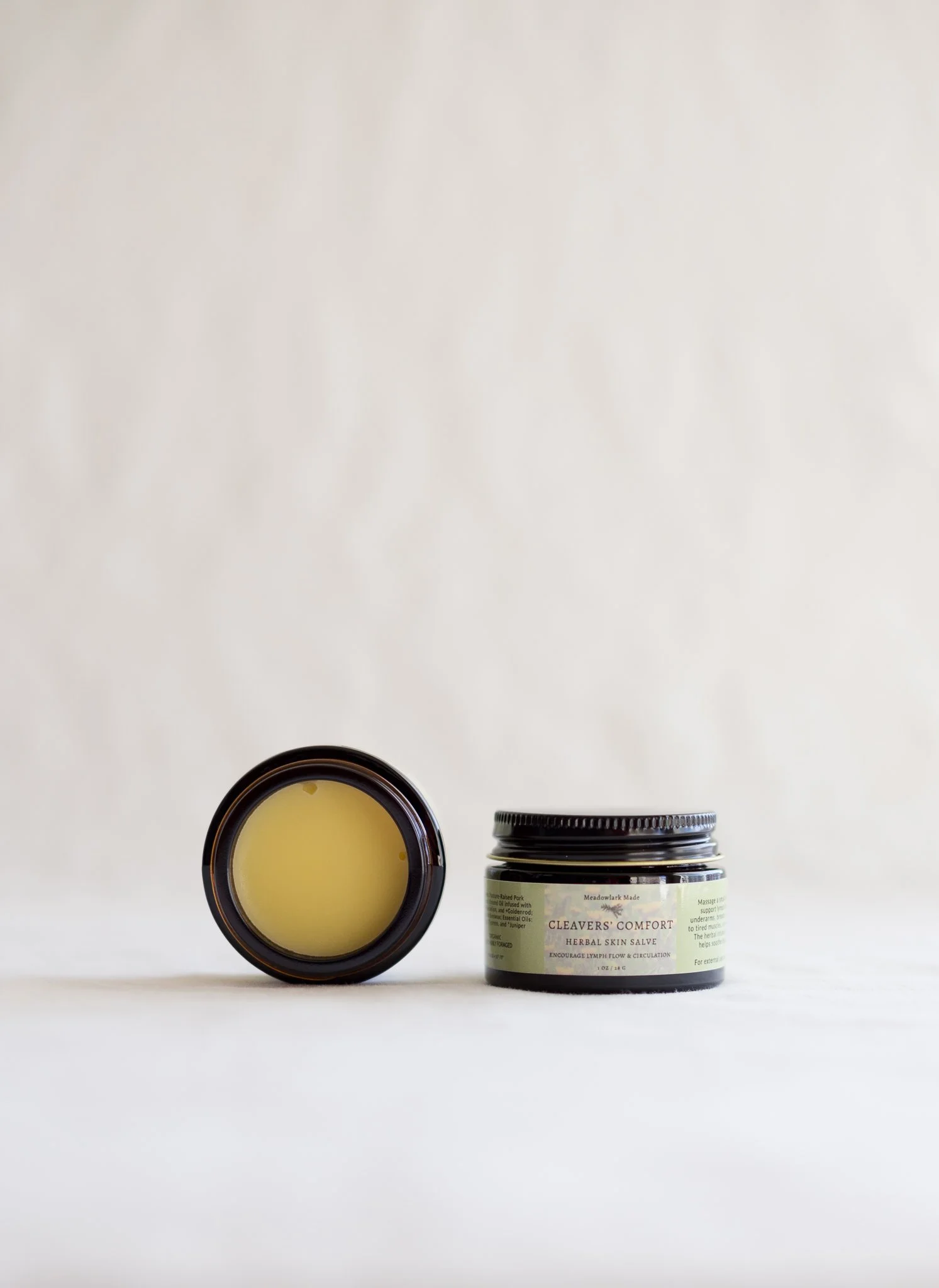
At Meadowlark Made, cleavers is thoughtfully infused into Cleavers’ Comfort, a botanical seasonal balm designed to support circulation and lymphatic movement.
This formula blends cleavers with other traditionally used herbs, including dandelion and goldenrod, which have also long been valued in herbal traditions for supporting circulation and skin vitality.
The herbs are slowly infused into certified organic sweet almond oil and combined with:
• pasture-raised pork tallow from our family farm
• locally sourced beeswax
• essential oils of grapefruit, cypress, and juniper
Together, these ingredients create a rich, nourishing balm designed to encourage movement and renewal for the skin.
A Gentle Herb Worth Noticing
Cleavers may not be the showiest plant in the meadow, but its quiet presence each spring carries a long history in herbal traditions.
For generations, herbalists have valued this humble plant for its gentle ability to support the body’s natural flow — both within the lymphatic system and through the skin itself.
Sometimes the most powerful plants are the ones that grow quietly at our feet.
Further Reading
Cleavers Benefits - Herbal Reality
How Cleavers Are Used for Cancer, Psoriasis, and More - Very Well Health
Cleavers: Benefits, Folklore, Botany & More - Traditional Medicinals
