

Pork Tallow vs. Lard for Skin

"Isn't pork tallow just lard?"
We hear this one at the farmers’ market every season, and we love answering it. We call our main ingredient pork tallow on purpose, and we’re proud of it. Here’s why.
What lard means
Lard is rendered pork fat. It's what most folks know from Grandma's pie crust or a cast iron skillet.
There are a few kinds:
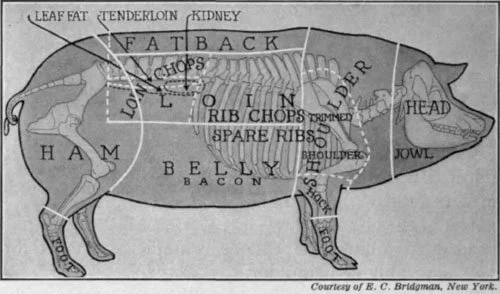
• Leaf lard comes from the soft fat around a pig's kidneys. It's the cleanest, mildest, and most prized. This is what we use.
• Back fat lard comes from under the skin along the back. It's good, but it can carry more scent.
• Store-bought lard is often hydrogenated so it stays shelf-stable. It's the block at the grocery store, and it's nothing like what we use.
What tallow means
Today, most people use "tallow" for rendered beef or mutton fat. But the word hasn't always been that strict. Historically, "tallow" was often used more loosely for rendered animal fats, and you'll still hear it that way on homesteads and in old recipes.
In skincare, "tallow" has become the everyday word for balms and butters made with rendered animal fat. Beef, pork, and even bison all show up under that name.
Why we proudly say pork tallow
Tallow simply means rendered animal fat. Over time, the word has come to mean beef or mutton fat in most kitchens, but in skincare it’s the name for balms, butters, and salves made with rendered animal fat. That’s exactly what we make.
“Lard” brings to mind a grocery store block or Grandma’s pie crust: a cooking fat. What we make is something different. We take only the leaf fat from our own Kunekune pigs, render it slowly ourselves, and use it as the base for skincare. Calling it pork tallow tells you what it’s for, what animal it comes from, and how much care goes into it.
No euphemisms and nothing hidden. Just pork tallow, from our pasture to your skin.
Why leaf fat makes such good skincare
Whatever you call it, rendered pork leaf fat is a wonderful skincare ingredient:
• It's rich in skin-friendly fatty acids. Oleic, palmitic, and stearic acid are the same fatty acids your skin makes in its own natural oils.
• It's soft and creamy. It melts on contact and sinks in easily, without the waxy feel of firmer fats.
• It's naturally mild. Leaf fat has very little scent, so herbs and essential oils can shine.
• It carries fat-soluble vitamins. Like all tallow, it naturally contains vitamins A, D, E, and K.
Read more about the benefits of pork tallow for skin.
What matters more than the name
What really matters is the fat itself and how it was handled:
• Which fat it is. Leaf fat is cleaner and milder than trimmings.
• How the animal was raised. Our pigs live on pasture here in Iowa.
• How it was rendered. We dry-render ours slowly, with no water, bleach, or deodorizers. See how we do it.
• What it's blended with. Herbs, beeswax, and plant oils make each product different.
If you're comparing pork with beef, we break that down in Beef Tallow vs. Pork Tallow for Skin.
Honest names, honest ingredients
Whether you call it pork tallow or lard, it's the same jar: slow-rendered leaf fat from pigs we raised, blended by hand with prairie herbs.
We'd rather explain it than hide it. That's the way skincare used to be, and it's how we want to make it.

